XRM
What is XRM?
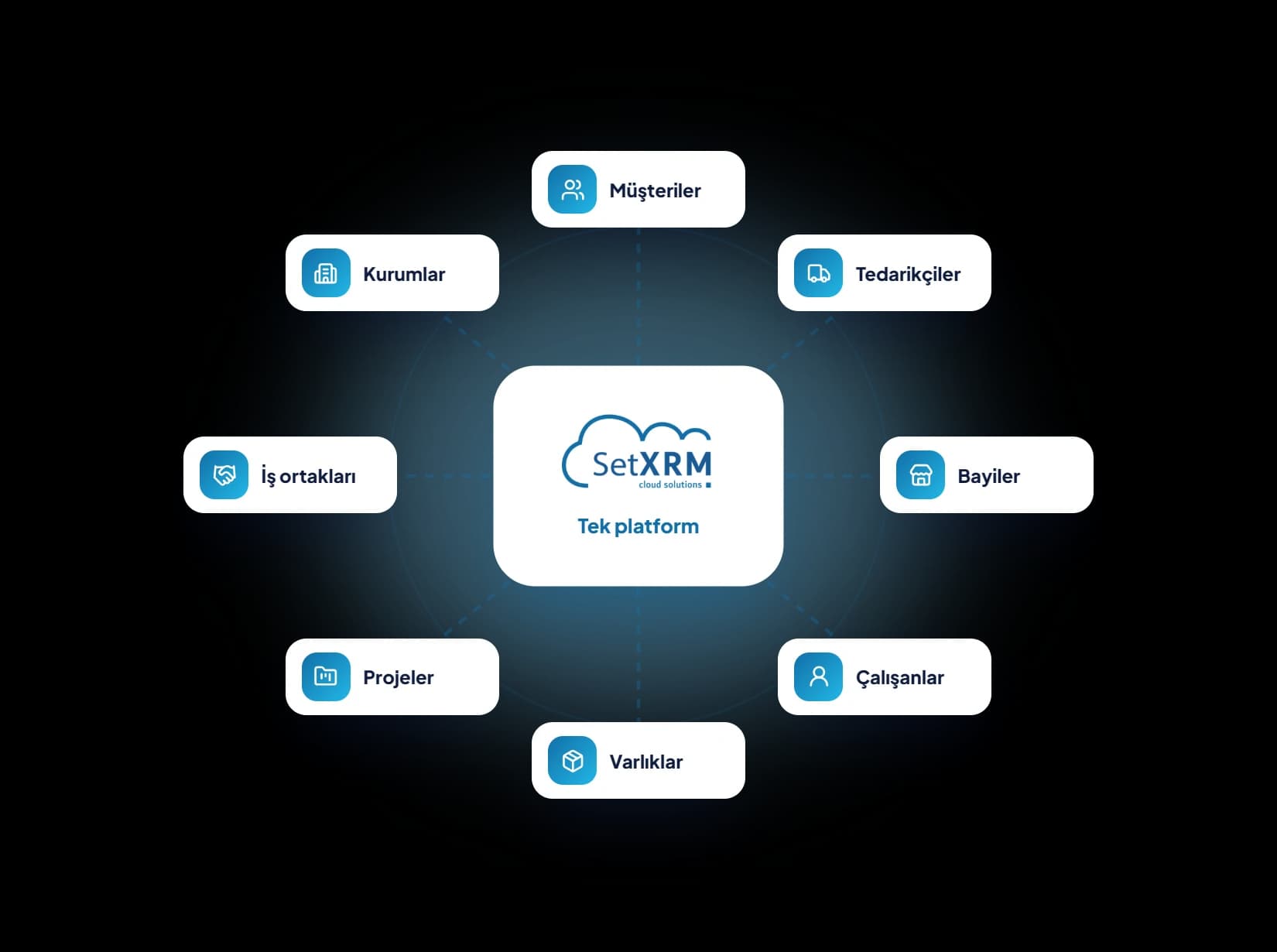
With XRM, you can effectively manage not only customer relationships but all relationships belonging to your organisation.
Extended Relationship Management
Extended relationship management
Organisations that use CRM aim to manage customer relationships. However, the system only lets them do so through basic records such as customers, activities, appointments and quotations. In reality, an organisation also needs to manage relationships specific to its industry, its business and its workflows – and this requirement is what created the need for XRM.
The main reason to use XRM instead of CRM: CRM is customer relationship management only (the C stands for Customer), whereas XRM is extended relationship management (the X stands for Extended or Any).
Comparison
Key differences between CRM and XRM
| CRM | XRM | |
|---|---|---|
| Focus | Management of sales, service and marketing activities centred on customer data | Management of all company units through effective use of all of the organisation’s data |
| Scope | Sales, marketing and service units | All units of the organisation |
| Analysis | Customer-related activities, tasks and similar actions | Analysis of customer and other relationships (X) |
XRM
Why XRM?
Competition demands more
In today’s competitive market, managing customer relationships alone is no longer enough.
The system adapts to your processes
Companies using CRM are forced to fit their workflows to the CRM structure, and projects fail. XRM covers not only marketing, service and sales but every department.
Better reports for the whole organisation
With active use, the reports produced become more efficient reports for the entire company or organisation – not just for three departments.
Let’s talk about how XRM can benefit your company
Call us or request a demo to learn more about XRM.